
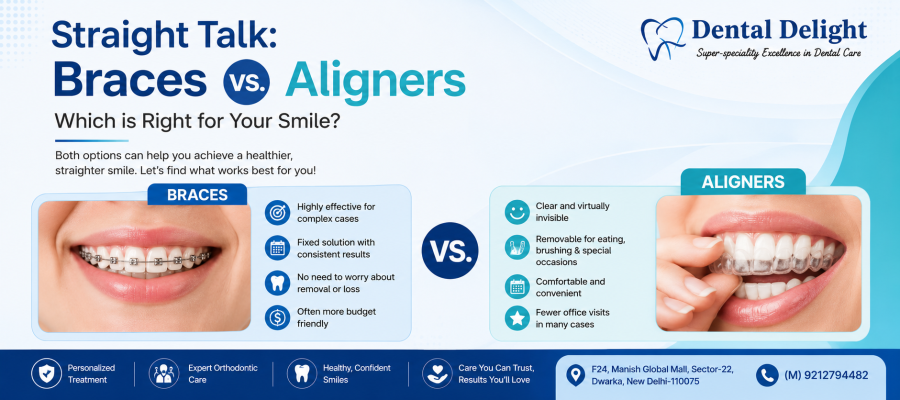
Straight Talk: Braces vs. Aligners – Which is Right for Your Smile?
Let’s be honest: very few of us are born with a perfectly symmetrical "Hollywood" smile. For the rest of us, there’s orthodontics. But gone are the days when getting your teeth fixed automatically meant two years of being called "metal mouth."
Today, the debate usually boils down to two heavyweights: Traditional Braces and Clear Aligners (like Invisalign). If you’re sitting on the fence, here’s the breakdown of what you actually need to know.
The Classic: Traditional Braces
Traditional braces have stayed relevant for a reason—they work. By using a system of metal brackets and wires, they exert constant pressure to move teeth into the desired position.
Why they’re great:
Complex Fixes: If you have severe overcrowding or complex bite issues (like a deep overbite), braces are often the "heavy lifters" that get the job done more effectively.
Zero Compliance Needed: You can't lose them! Since they are bonded to your teeth, you don’t have to worry about forgetting to put them back in after lunch.
Cost-Effective: Generally, traditional braces remain the most budget-friendly option for comprehensive orthodontic work.
The Modern Choice: Clear Aligners
Aligners have revolutionized the industry by offering a nearly invisible way to straighten teeth using a series of custom-made plastic trays.
Why people love them:
Aesthetics: They are subtle. Most people won’t even notice you’re wearing them during your morning meeting or a dinner date.
Dietary Freedom: You take them out to eat. That means no giving up popcorn, sticky caramel, or corn on the cob.
Easier Hygiene: Since you remove the trays, you can brush and floss normally without navigating through a maze of wires.
The Reality Check: Which Wins?
Choosing between the two isn’t just about looks; it’s about lifestyle and complexity. If you are someone who might "forget" to wear your aligners for the required 22 hours a day, braces are your best friend. However, if you have a big event coming up (like a wedding) and only need moderate corrections, aligners offer unparalleled convenience.
Pro Tip: Your orthodontist is the ultimate referee here. They’ll use 3D imaging to determine if your roots and jaw structure are better suited for one over the other.